ServicesConstruction Debris Removal
Construction Debris Removal in Umatilla
We deliver a roll-off sized to what your project actually produces: dense shingles, wet drywall or bulky framing lumber. We swap or haul it on your schedule, then check back once the final pickup is done to make sure the driveway and yard came through clean.
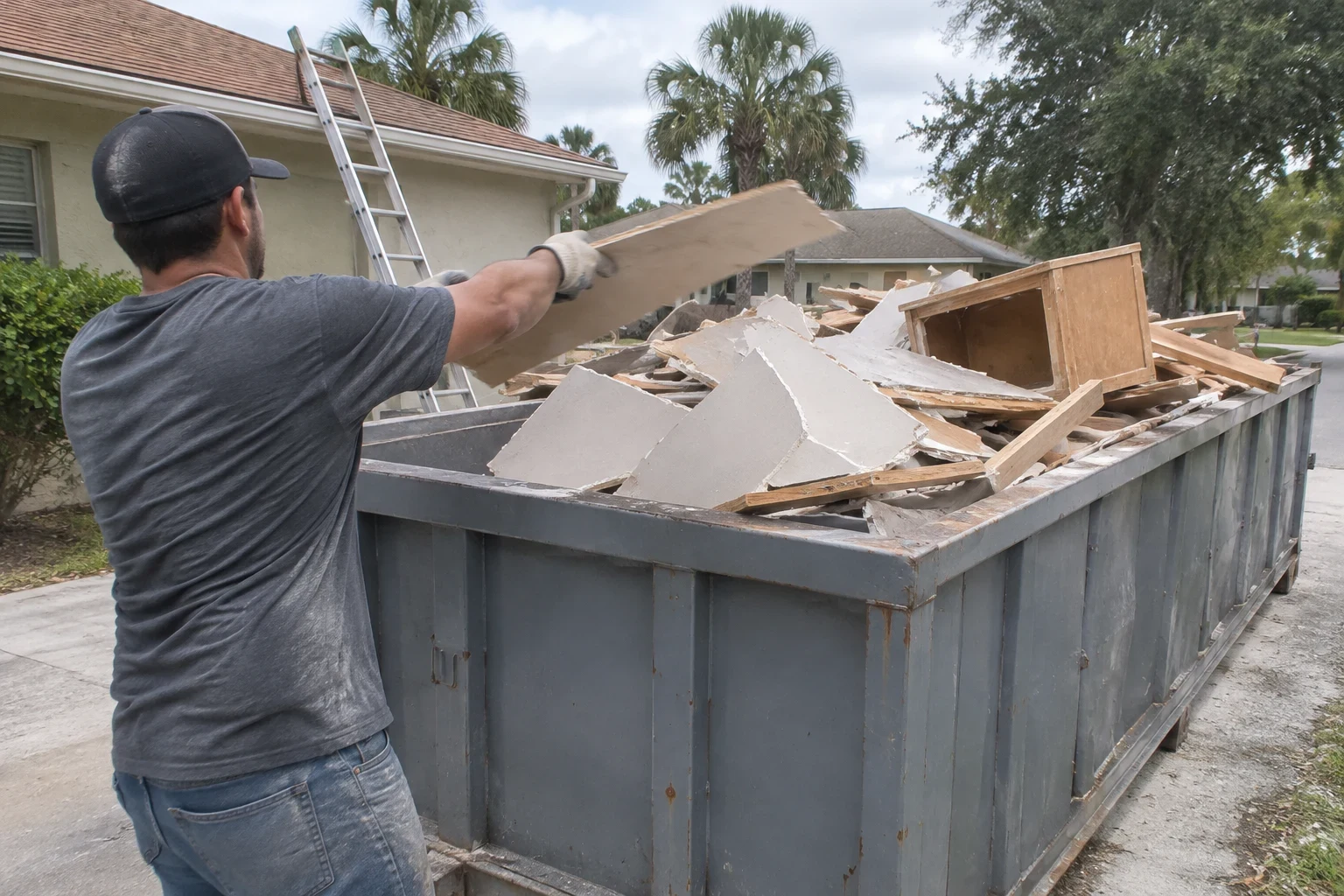
Getting tear-out and offcuts off the job site
Construction debris behaves differently from household trash. Drywall, plaster, asphalt shingles and broken tile are dense, so they hit a container's weight allowance long before they fill it. Framing lumber, old cabinets, carpet and packaging do the opposite and take up volume. We size the dumpster to the mix your job creates. That way you are not paying to haul empty space or getting surprised by an overweight charge.
This service fits remodels, roof tear-offs, additions, and demolition of decks, sheds or interior walls. Homeowners doing their own work use it, and so do contractors and roofers who want the debris handled while their crews keep working. For a garage or estate cleanout with no construction material, Roll Off Dumpster Rental is the better fit. Ongoing trash for a business is covered by Front Load Dumpster Service.
Our work does not stop when the truck pulls away. Once the last haul is gone, we follow up to ask how the site looks. We tell you what to sweep for and how to treat any marks the container left behind.
What construction debris removal includes
- Sizing by material
- On the call we ask what is coming out and roughly how much. A full asphalt shingle tear-off is heavy for its size. A kitchen gut is mostly bulk. Concrete, brick and soil go in a smaller container because the weight limit is reached well before the box is full.
- Placement planned for the surface
- We set boards under the rails and wheels on concrete and pavers to spread the load and limit scuffing. Before we drop the container, we confirm clearance from overhead lines and low tree limbs, and that the truck can back in without crossing soft lawn.
- Swaps during the job
- When a container fills mid-project, we pull it and set an empty one in the same footprint. Your crew keeps loading, and the boards and access path stay where they were.
- A plain list of what can't go in
- Paint, solvents, fuel, tires, batteries, appliances that hold refrigerant and other hazardous materials need separate handling. We go over the list before delivery so nothing gets pulled out of the load at the disposal site.
- Final haul away and a check-back
- When the last pickup is done, we call to ask about the site. We tell you how to deal with the patch of grass under the boards and the stray fasteners that tend to collect near the loading side.
Signs your project needs a debris container
Piles are growing against the house
Debris stacked on the lawn smothers grass within days and hides nails and screws. Every pile also gets handled twice: once to stack it and once more to load it.
Truck runs are eating your work days
If you or your crew spend hours driving loads in a pickup, that time comes straight out of the project schedule.
A roof tear-off is on the calendar
Old shingles, felt underlayment and flashing come off fast and land heavy. A container parked below the roofline lets the crew drop debris straight in.
Demo uncovered more than you planned
Opening a wall or floor often turns up rotted subfloor, damaged sheathing or old layers of tile. Volume grows quickly once that comes out.
The site is turning into a hazard
Loose boards, protruding nails and broken tile underfoot are how people get hurt on a job site. Getting debris into one container clears the walking paths.
How a debris removal job runs
- 1
Call with the project details
Tell us the type of work, the main materials coming out and where the container can sit. We recommend a size and explain the weight allowance that comes with it.
- 2
Delivery and placement
We lay down the boards and drop the roll-off where you pointed. Then we check that the door swings open toward the loading side and that the drop does not block your garage or the street.
- 3
Loading the right way
Put heavy, flat material like tile and plaster on the bottom, break down bulky pieces, and keep the load below the top rim so it can be hauled safely. Our summer storms soak open drywall and add real weight, so cover the load with a tarp when rain is coming.
- 4
Pickup and follow-up
Call when the container is full or the job is done, and we schedule the swap or the final haul away. Then we check back about the site and walk you through cleanup of the footprint area.
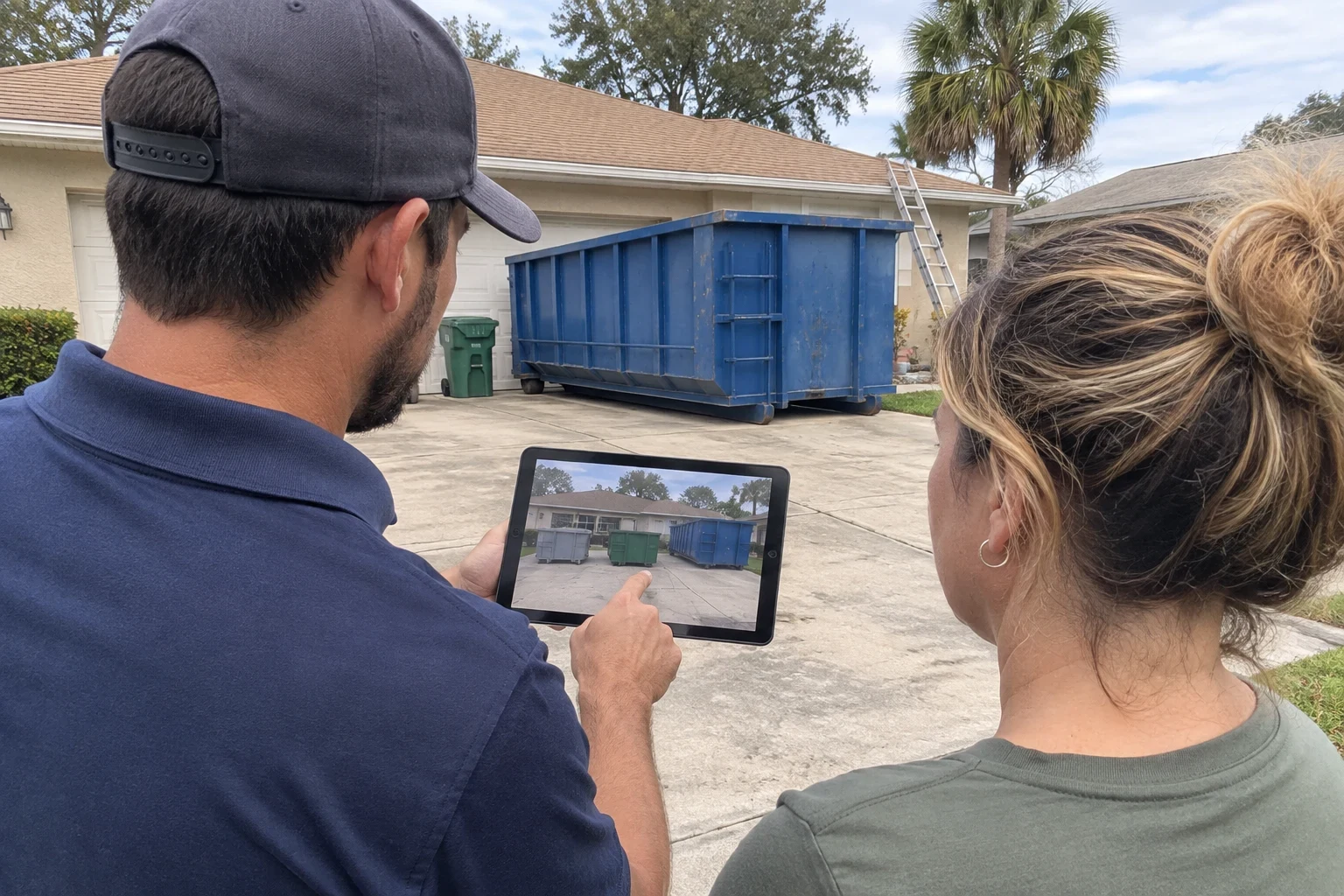
What moves the cost of debris removal
We quote the rental as a flat rate with the weight allowance and rental period spelled out, so you know which part of the price depends on the load. The things below change that number. You get your quote by phone once we know what is coming out.
- Container size
- Larger yard sizes cost more to deliver and haul. Picking the right size the first time usually costs less than adding an extra swap.
- Weight of the material
- Shingles, concrete and wet drywall can push a load past its allowance, and the overage is figured from the disposal site's weight ticket.
- Rental length and swaps
- Longer projects and multiple swaps add to the total. A realistic schedule up front keeps that predictable.
- Placement and permits
- A container on your own driveway is the simplest setup. Street placement may need a permit from the city, which can add a step and a fee.
- Items needing separate handling
- Mattresses, tires or appliances mixed into a load can carry extra charges or have to be removed before disposal.
Construction debris removal questions
Something not covered here? (352) 703-6121
Can I mix shingles, drywall and lumber in one container?
In most cases, yes. Mixed construction debris can share a container. The thing to watch is weight, since shingles and drywall get heavy fast. Tell us the mix on the call and we will size the container around the heaviest material.
What happens if the dumpster goes over its weight allowance?
The load is weighed at the disposal site, and anything over the allowance is billed as an overage. We tell you the allowance before delivery. If your job is mostly concrete, brick or tile, we will suggest a smaller container that stays within its limit.
Will the container damage my driveway?
We set boards under the rails to spread the load, which keeps scuffing and cracking risk low on concrete and pavers. Asphalt softens in summer heat and can show faint rail marks. On the follow-up call we explain how to check for marks and what usually fades on its own.
Do I need a permit for a construction dumpster?
A container placed entirely on your own property usually does not need one. Placement on a public street often does, and some homeowner associations have their own rules. We tell you what we know on the call, and it is worth confirming with the city or your HOA before delivery.
What does your follow-up after pickup involve?
Once the final haul away is done, we reach out to ask how the site looks. We remind you to run a magnet sweep near the loading side for nails and staples. We also explain how to rake and water the grass that sat under the boards so it recovers.
Do you handle job sites outside Umatilla?
Yes. We bring construction containers to projects in Eustis, Mount Dora, Tavares, Lady Lake and other nearby towns. Give us the site address on the call and we will confirm delivery.
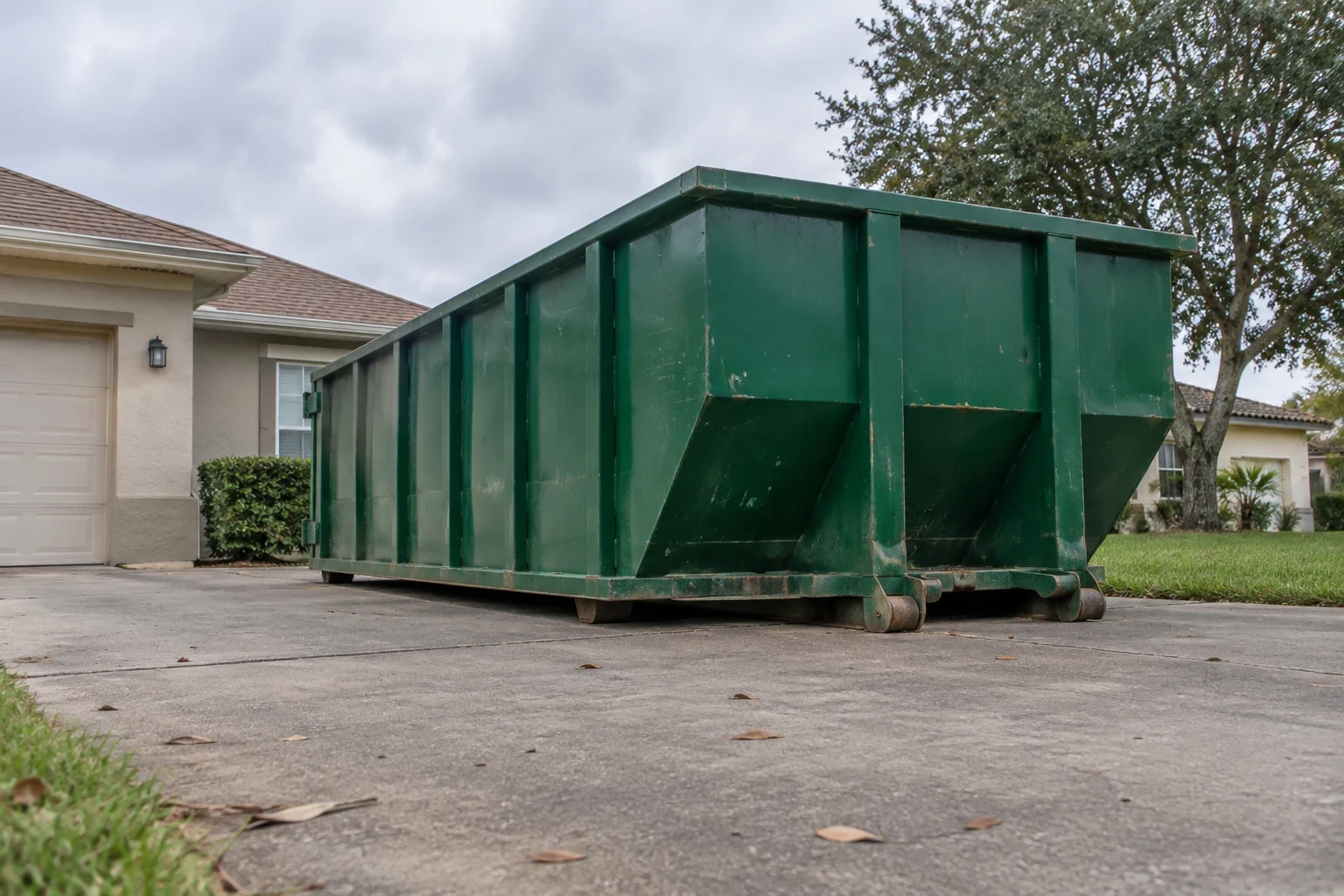
Clear the debris before it slows the job
Tell us what is coming out and when demo starts. We will recommend a container size, set the delivery and check in once the last load is gone.